



The accounts are running. The compound effect is rolling. On paper, everything is working.
So what am I worried about?
That’s the part I never anticipated.
I expected the pressure while I was trying to build something. I expected the uncertainty when funds were low and the future felt unclear.
What I didn’t expect was the mental weight that would show up after things started working.
I thought reaching this point would create more peace of mind. Instead, it’s introduced a completely different set of questions — ones I wasn’t prepared for.
As I’ve taught Parker, our job with money is to make it, keep it, and build it.
I’ve spent most of my life focused on the first one. I’m just now learning how to make it more efficiently. But lately, my attention has shifted to the other two: keeping it and building it.
And that’s where the anxiety lives.
The more I learn, the more I realize how much more there is to learn. Every answer seems to uncover three new questions. Every strategy reveals a potential blind spot. Every plan exposes another hole, another leak, another variable I hadn’t considered.
Should more capital be deployed into the market or held in reserve? Is my insurance coverage actually sufficient? Am I being tax-efficient, or am I leaving money on the table every year? What happens if I’m not here tomorrow?
It’s a never-ending loop.
I have a hard time turning it off. My mind is constantly running scenarios, evaluating risks, thinking about next steps.
What am I missing? What could be done better? What’s the smartest move from here?
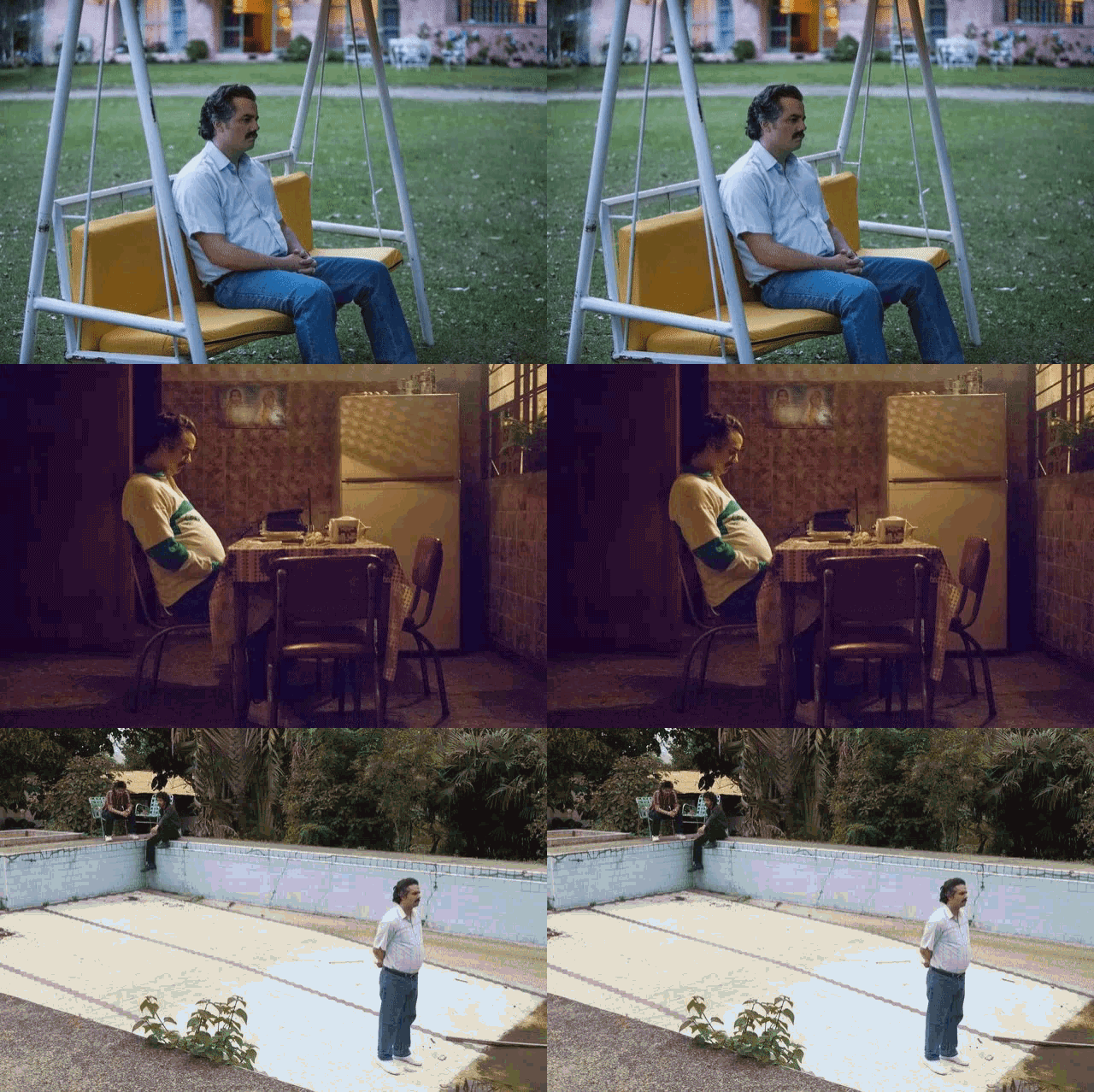
The strange thing is that the stakes feel higher now than they did when I had less. I’ve become increasingly aware of the responsibility that comes with building something worth protecting.
The larger challenge isn’t making money anymore. It’s being a good steward of it. It’s understanding how to keep it, grow it, protect it, and eventually pass it on wisely.
Stewardship sounds noble in theory. In practice, it looks like reading policy documents, reviewing beneficiaries, questioning assumptions and trying to make decisions that your future self — and your family — won’t regret.
Every decision comes with consequences, and stewardship requires a different kind of attention than earning ever did.
That responsibility occupies more mental real estate than I ever expected.
A lot of people are drawn to the idea of generational wealth. I certainly was. It sounds great in conversation. It looks great on a list of goals.
What gets talked about less is what it demands of you.
I’ve realized there’s a significant difference between wanting generational wealth and accepting what it takes to create it.
One is a compelling idea. The other is a daily commitment.
The irony is that the money itself isn’t what’s occupying my mind. The responsibility is.
Maybe this is just another stage of the journey. Maybe this is the price of caring deeply about stewardship. Maybe it’s a reminder that every level comes with its own challenges.
Either way, it’s a form of financial anxiety I never saw coming.
The money is doing exactly what it’s supposed to do.
I’m the one who’s still learning how to live with it.
Do you know your money demons?

Money demons, as defined by Dr. Boyce Watkins, are any fears, anxieties or negative beliefs about money that can undermine and sabotage your financial thinking.

The financial trap no one talks about

Over the past month alone, I’ve been to a concert, a comedy show and even splurged for “Sinners” — despite today’s outrageous movie theater prices.
Each phase has some new things to "worry" about. We are essentially financially independent but our current phase brought struggles of trying to learn how to spend after years of saving. It's kinda nuts but harder than we expected to give ourselves that permission. Hang in there.
Master steps 2 and 3 as quickly as possible -- OR you could end up like many of us who reverted back to __ "We've Got Money! Let's Spend It!!"