


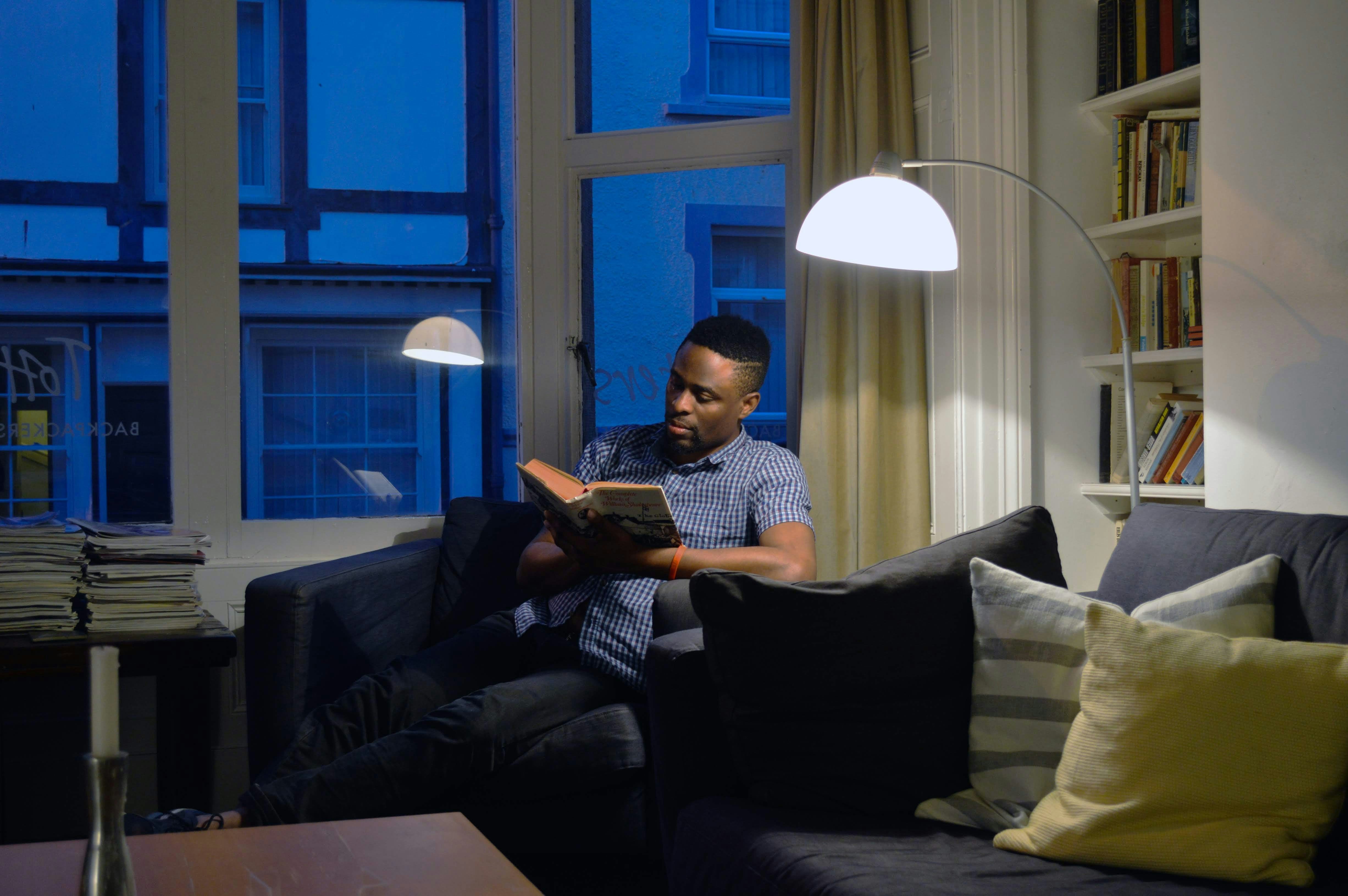
Editor’s note: This is Part 1 of a five-part series, “R-E-M-E-W,” built around five essentials I’ve come to believe are worth making part of everyday life. Each installment explores one of the practices I’m learning to prioritize as I figure out what it means to live well.
Part 1: Read | Part 2: Eat to live | Part 3: Meditate | Part 4: Exercise | Part 5: Write
I was never much of a reader growing up.
I was into sports. Basketball, especially. If I picked up something to read, there was a good chance it had a box score, a player profile or something else sports-related.
When I decided I wanted to become a sports writer, people gave me plenty of advice. One piece came up often: Read. Read a lot.
The advice made sense. Sort of.
Nobody really told me what I should be reading. So I mostly read what I already knew.
I read more sports stories. I studied how other writers covered games. I paid attention to their voices, their reporting and the way they told stories.
It worked. I became a better sports writer.
But I wasn’t necessarily becoming a better person.
That distinction took me a while to understand. I was getting better at my profession without necessarily expanding my view of the world.
For years, I sat on press row at NBA games alongside some of the smartest people in the business. Many understood before others that the 3-point shot was becoming more valuable — not just because it was worth an extra point, but because it made most mid-range shots less valuable by comparison.
I understood the concept. And I watched the game evolve into the 3-point fest it is today. Just look at a box score. Teams routinely attempt more 3-pointers than mid-range shots.
Eventually, I realized I was taking the intellectual equivalent of a lot of middies.
I was reading. I was learning. I was growing professionally. But I was spending most of my time inside the boundaries of what I already knew.
I had spent years learning how to broaden my game. I hadn’t yet learned how to broaden myself.
That changed when I started reading outside of sports.
I’ve written before about going from reading box scores to reading balance sheets. I remember how uncomfortable that transition was. Learning the language of money, investing and wealth wasn’t easy. It required me to sit with things I didn’t understand and keep going anyway.
I understand why someone wouldn’t voluntarily put themselves through that.
But I also know what can be waiting on the other side.
I can point to a half dozen books that changed the way I think about money and life. They didn’t simply give me information. They changed the questions I was asking.
I’m still evolving as a reader. Lately, I’ve found myself increasingly drawn to history and biographies. I want to know more about the people and events that shaped the world around me. I want to understand the lives that look nothing like mine and learn from experiences I could never have lived myself.
That’s one of the gifts of reading. It can introduce you to an idea you didn’t know you were missing, a perspective you hadn’t considered or even a version of yourself you hadn’t yet met.
And we have more access to information than any generation before us. Somehow, sustained reading can still feel harder than ever.
Our attention is constantly being pulled in different directions. We can consume hundreds of pieces of content in a day without sitting with any of them for very long.
Reading asks something different of us. It asks us to stay.
That has been a challenge for me, too.
Audiobooks saved me.
They gave me another way to absorb a book when sitting down with the traditional version wasn’t working. I could listen while driving, walking, cooking or cleaning. I could stop, slow down, rewind and listen again.
These days, one of my favorite combinations is an audiobook and the elliptical. That took some time, too. Music had long been my default on the elliptical. Eventually, I realized I could use that time differently. Now I’m taking care of my body while feeding my mind.
That’s what I’ve learned about reading: It doesn’t have to look a certain way.
Maybe you’re a lifelong reader. Maybe, like me, you had to find your way to it. Maybe you have a stack of books you’ve been meaning to finish, or maybe the better entry point for you is an audiobook on your commute, during a walk or while you’re working out.
The point isn’t to read 50 books a year.
The point is to keep expanding your range.
Because there is a whole world beyond what you already know. And there may be a better version of you waiting on the other side of what you’re willing to explore.
I spent years sitting on press row learning the value of taking the better shot. Then it finally hit me.
I needed to apply that lesson to more than basketball.
I needed to stop settling for intellectual middies, too.


Bitcoin resources for beginners

For years, the No. 1 rule of money was simple — don’t talk about it.
Excellent article. Studies show wealthy people have more books in their homes than TV's. Being a lifelong reader/ learner is so important. And yes... audiobooks count (which is good for someone like me that drives 40 min each way to work everyday).