


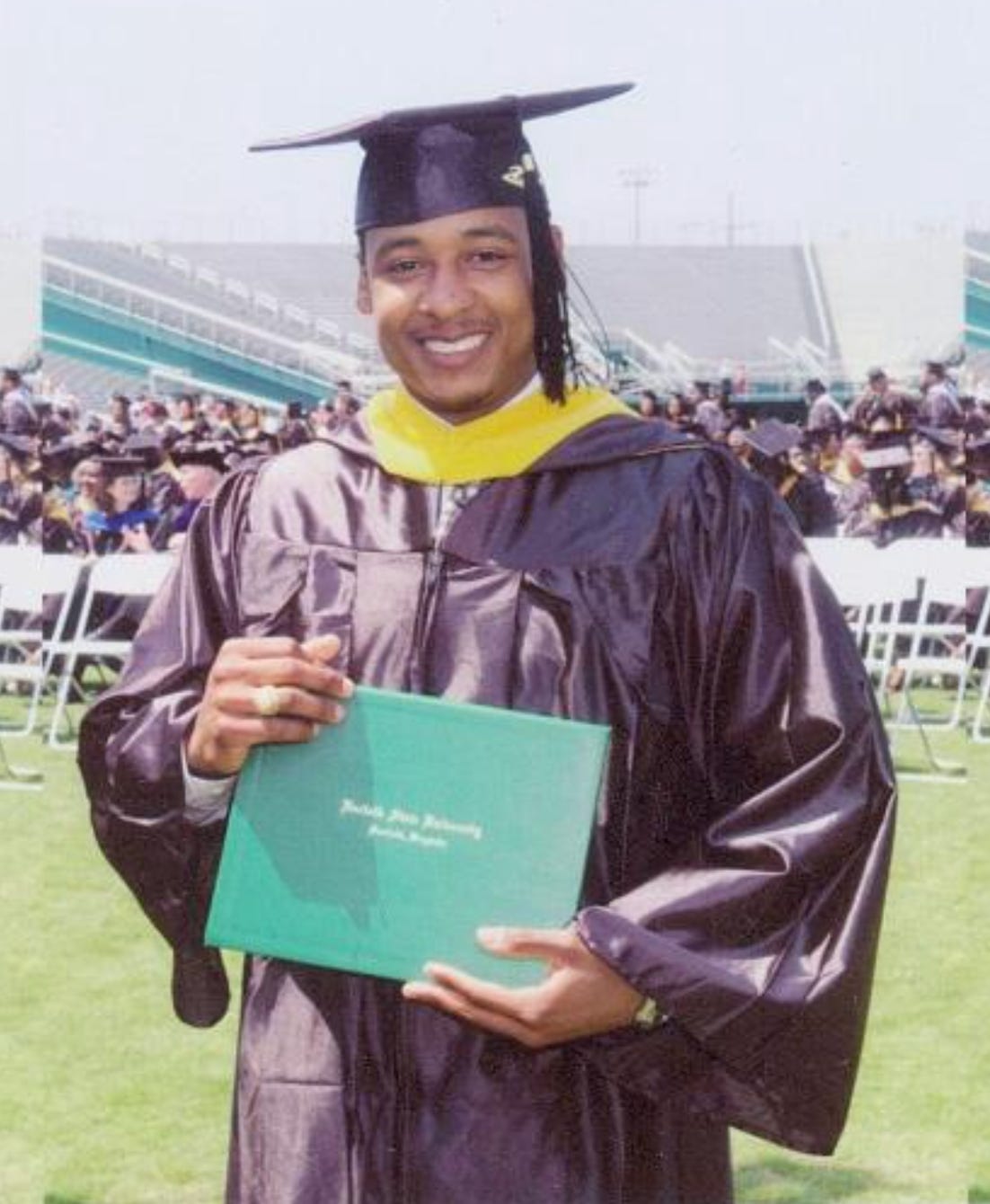
There will be no stage to walk across.
No commencement speech from a celebrity influencer. No “Pomp and Circumstance.” No tossing a cap into the air. No relatives flying across the country. No gifts. No afterparty. No congratulations. No class ring. No yearbook.
On Saturday, there will be a modest celebration for one.
Me.
Because four years ago, I went back to school.
My freshman orientation was Sept. 26, 2022 — the day I bought my first stocks and decided I was going to get serious about learning about money.
And now, four years later, I’m graduating.
That’s the same amount of time it took me to earn my bachelor’s degree. The funny thing is, I have considerably more pride in this accomplishment.
I don’t even know where my college diploma is.
I blame Parker.
Really. I truly believe she threw it away years ago. Lately, she’s even come to my side, admitting that maybe she did toss it.
It’s not the end of the world. It was a piece of paper.
What I’ve accomplished over these past four years, however, carries considerably more weight.
So I decided to commemorate the occasion properly.
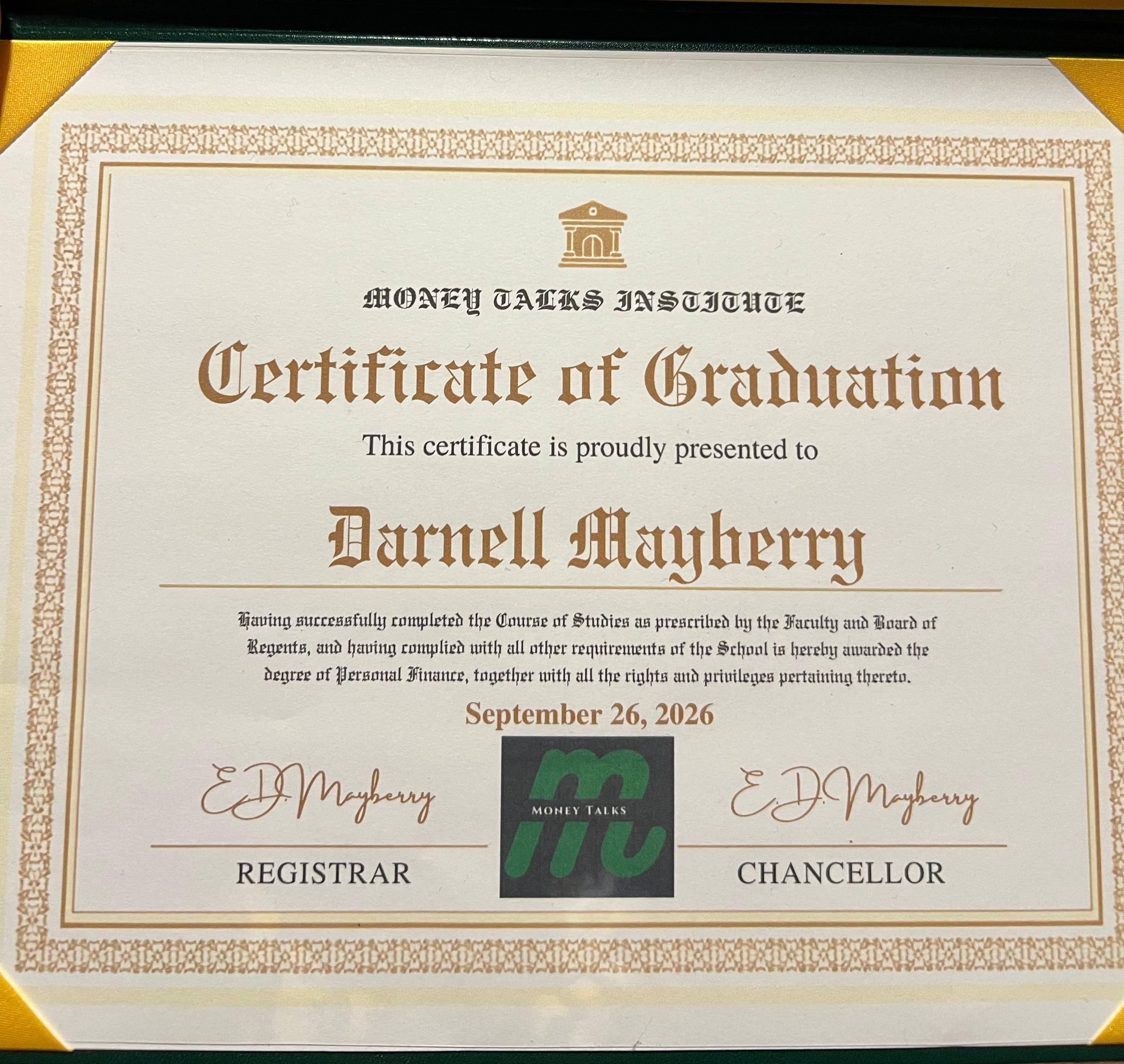
I awarded myself a degree from the Money Talks Institute.
The school — my school — awarded me a degree in Personal Finance.
And I earned it.
I have spent approximately 1,460 consecutive days educating myself. There were no Thanksgiving breaks. No winter breaks. No spring breaks. No summer vacations.
But there were countless sleepless nights and just as many early mornings.
A day hasn’t passed when I haven’t read, listened, watched, studied, analyzed, evaluated, experimented, failed, succeeded and grown.
There were plenty of moments when I understood very little of what I was reading. There were concepts I had to revisit three, four or five times before they clicked.
I’ve studied budgeting, cash flow, saving, banking, credit, debt, taxes, retirement, insurance, housing, financial planning and, of course, investing.
The deeper I went, the more I realized how interconnected all of it is. A decision about debt affects cash flow. Cash flow affects saving. Saving affects investing. Taxes affect nearly everything.
Much of that education cost me little or nothing.
Free audiobooks on YouTube. Podcasts. News articles. Documentaries. Finance creators who are far ahead of me in their journeys.
I spent some money, too. An Audible subscription accelerated my learning. I attended finance-focused conferences. I joined paid online communities.
You don’t need a fancy classroom, an expensive degree or a six-figure salary to begin learning how money works. You need curiosity, consistency and a willingness to keep going when the material gets difficult.
The greatest investment was the decision to pour into myself.
I didn’t wait for someone to save me. I didn’t assume a degree and a good-paying job would automatically create the life I wanted. I didn’t want to spend my life building someone else’s vision while hoping there would eventually be enough time left to build my own.
I chose a different path. I chose to become self-educated.
That decision is priceless. And no one can take it away from me.
The return on that investment has been asymmetric.
No one claps for you when you spend a Tuesday night learning what an index fund is. Nobody sends you a congratulatory card or text because you finally understand how a Roth IRA works. There is no audience when you sit alone and realize that a financial mistake you made six months ago taught you something you’ll never forget.
That’s the strange thing about self-education. Much of the work is invisible.
But I know what it has done for me. So I kept going anyway.
And I’m not done.
My next two years will be dedicated largely to investing.
So, in 2028, check back with me. I anticipate earning my master’s.
Same school.
Same student.
Same commitment.
With a lot more to learn.


How three years of investing rewired my thinking

I started investing three years ago to build wealth. What I built instead was discipline, clarity and a new way of thinking.